How to Handle Last-Minute Requests at a Wedding
Songs not on the setlist, schedule changes, requests from guests: how to prepare for surprises on the day without losing control.
March 20, 2026 · BandCalendar

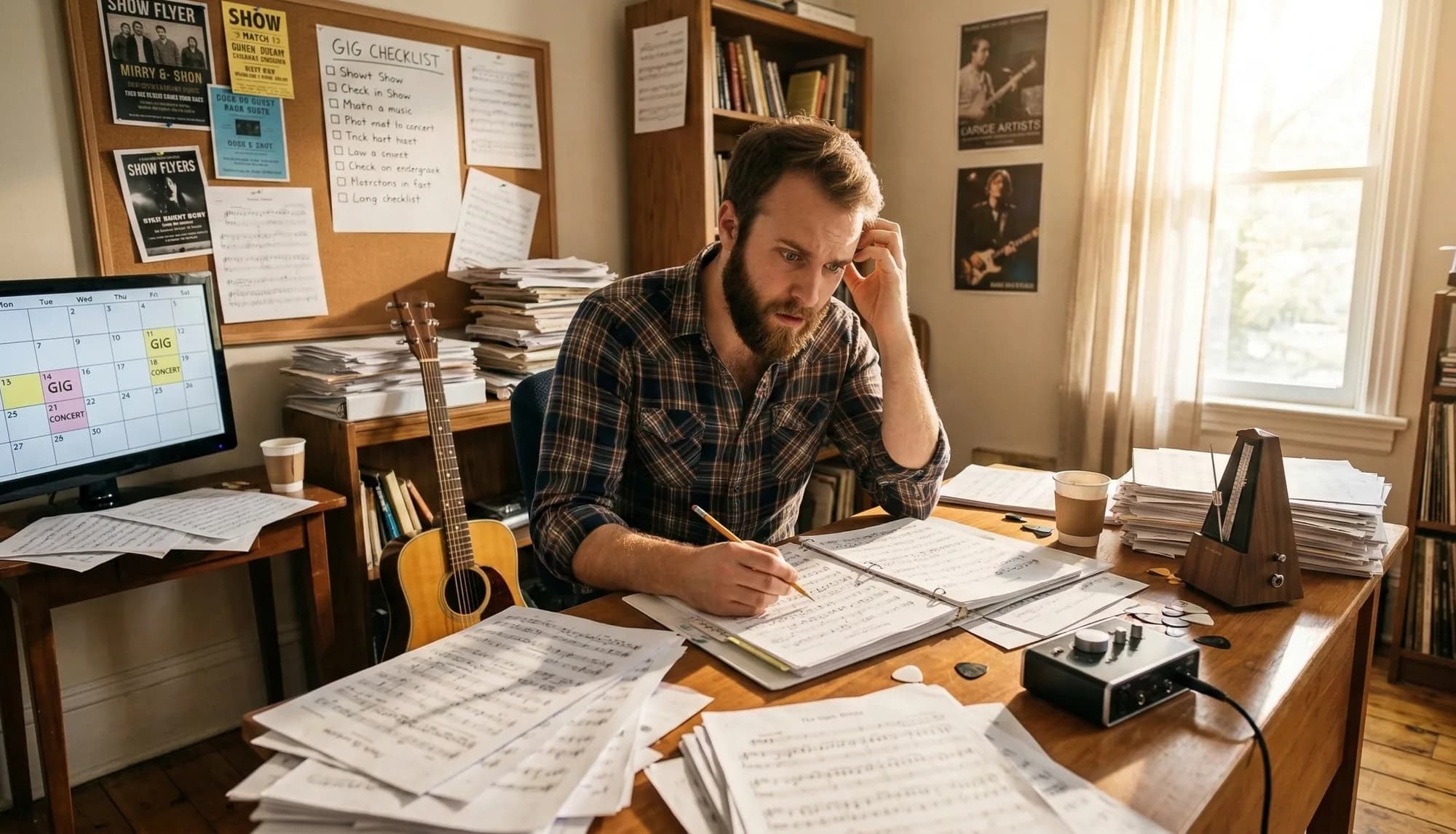
The unexpected is the rule
It's thirty minutes before the couple's entrance and three requests arrive at once: the mother of the bride asks for an extended set, the wedding planner reports a twenty-minute delay, a relative walks over with their personal playlist.
The instinctive reaction is to say yes to everything. But doing so without a clear system is the fastest way to lose control — of the setlist, of the timing, of your reputation. Professionalism isn't measured by your willingness to accommodate everything, but by your ability to handle the unexpected without it affecting the event.
The most common requests
Songs outside the repertoire. "Could you play this song?" It's often not in the repertoire, you've never rehearsed it, and the request arrives half an hour before you'd need to perform it.
Service extensions. "I thought you were playing during the cocktail hour too?" Or: "Can you play another thirty minutes?" — with the implication that the price stays the same.
Schedule changes. The ceremony runs late, the catering slows down. Every delay ripples through the setlist.
Requests from guests. During the drinks reception, guests approach the stage with specific requests — some reasonable, some way off.
These situations aren't exceptions: they're the norm. The question isn't whether they'll happen, but how you'll handle them.
Prevention: three essential practices
A granular contract
Vague phrases like "musical entertainment for the wedding" leave room for interpretation. Better to specify: how many sets are included and the duration of each, which moments are covered, what happens in the event of an extension, timings with any agreed leeway built in, the agreed lineup, audio equipment included.
A client who finds this information in writing has fewer doubts — and fewer doubts mean fewer calls in the final hours.
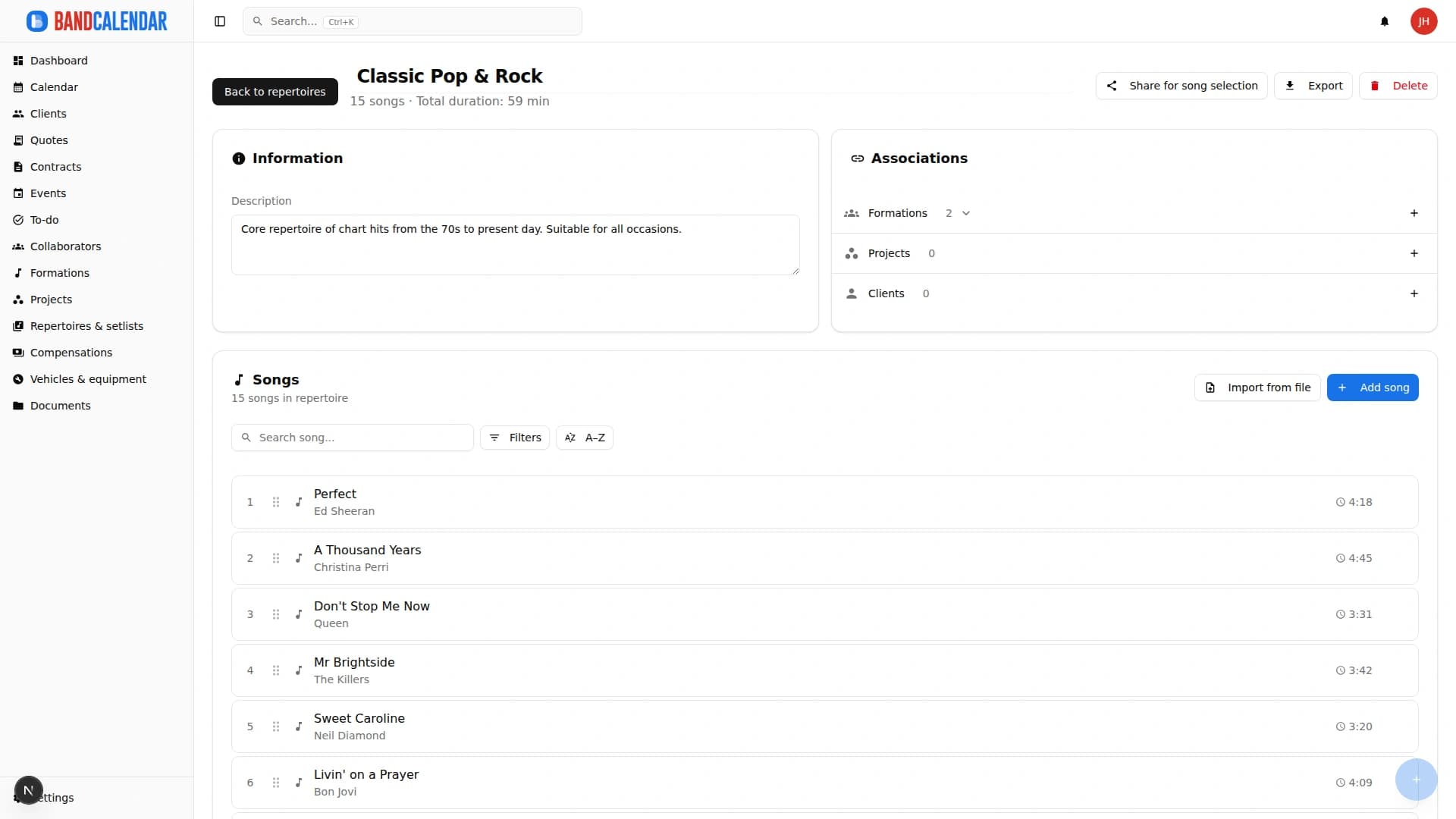
An approved setlist
A setlist isn't just a list of songs: it defines how the evening unfolds, the fixed moments, the breaks. Once the client has approved it, every change becomes an explicit variation, not something taken for granted.
Centralised communication
When information travels across WhatsApp, email and phone calls, something always gets lost. Having one single place where everything is recorded — preferred songs, songs to avoid, notes for each moment — is the only effective safeguard.
Handling requests on the night
Songs outside the repertoire
An honest answer is almost always the right one, but it needs to be framed carefully:
"Let me check if it's in our repertoire. If we don't have it, I can suggest similar alternatives we know well."
If it's outside the repertoire, you have two options: explain that playing it properly requires rehearsal — clients appreciate honesty — or propose a song with the same feel. Often the client wants "something romantic" more than that specific track.
Service extensions
If the contract includes an overtime rate, simply apply it. If nothing is written down, the situation gets complicated: refusing looks petty, accepting means working for free.
This is why professional bands include an overtime clause with a clear hourly rate. The conversation about payment happens beforehand, not afterwards.
Schedule changes
Build in a 15–30 minute buffer between every major transition. A brief update to the client — "I can see the ceremony is running long; we'll move the drinks reception forward by fifteen minutes" — turns a potential problem into a smooth, professional handoff.
Requests from guests
Basic rule: all guest requests go through the couple or the wedding planner. It's not your call to decide whether a song is appropriate.
"Great idea! Would you like to mention it to the couple? If they're happy, we'll see if we can fit it in."
If the request is clearly out of place, simply refer back to the approved setlist: "That song isn't on the setlist the couple approved."
Plan B (and C)
Unavailable musician
A serious band has a list of reliable substitutes who know the core repertoire. Sheet music must be available, setlists clear.
Technical failures
Travel with duplicates of everything critical: cables, microphones, power adaptors. The backup mixer doesn't need to be identical to the main one — it just needs to work.
Delays
Two hours before the official start time is the minimum. In historic villas or shared spaces, musicians sometimes arrive three or four hours early. That's not wasted time: it's the margin that absorbs any unexpected hitch.
How to say no and stay professional
Frame it positively. Instead of "We can't do that song," try "We can do this other track with the same feel."
Explain why. "To play it well we'd need more rehearsal. I don't want to risk an unrehearsed performance."
Offer an alternative. A relative requesting a song often just wants to be helpful. Suggest dedicating a dance to them or making an announcement.
Refer back to the client. "Let's check with the couple." Often the request fades on its own.
The tools
BandCalendar solves this problem at the source: the client has a dedicated link to note preferences and songs to avoid; you find everything in the management system with automatically generated setlists and contracts that already include overtime clauses.
When an unexpected request arrives, you're not searching through old emails: you open the app, check what was agreed, and respond with the facts at hand.
The bottom line
Clear contracts, approved setlists, centralised communications, technical and human backups. These aren't optional extras: they're the baseline for anyone doing this work professionally.
The average client doesn't know these problems exist. They just expect everything to work. But when something goes wrong and you handle it well, that professionalism turns into a positive review, a referral, a client who comes back.
Professionalism shows in the difficult moments. And at weddings, the difficult moments always come.
Related BandCalendar workflows
Explore the connected features
Setlists and repertoires
Organize repertoires, song catalog, keys, notes, total duration, event setlists, song requests from the audience or client, exports and public shares in a workflow connected to events.
Open pageWedding bands
BandCalendar helps wedding bands and live musicians turn inquiries, quotes, contracts, repertoires, setlists, logistics and payments into one workflow that the whole team can use before, during and after the event.
Open pageEvent calendar
An operational calendar for musicians and bands that connects sales pipeline, clients, gigs, rehearsals, tasks, reminders, lineups, documents, Excel export and personal Google Calendar and Apple Calendar/iCloud sync.
Open pageStop wasting time with Word, PDFs and spreadsheets.
- Contracts with simple electronic signature and tracked communications
- All confirmations in writing, no verbal-only agreements
- Protected reputation: everything in black and white
Get one useful guide a month