First Gig as a Dep: Mistakes to Avoid
Called in at the last minute to cover for a musician? The mistakes that damage your reputation — and how to prepare so you make a great first impression.
March 20, 2026 · BandCalendar
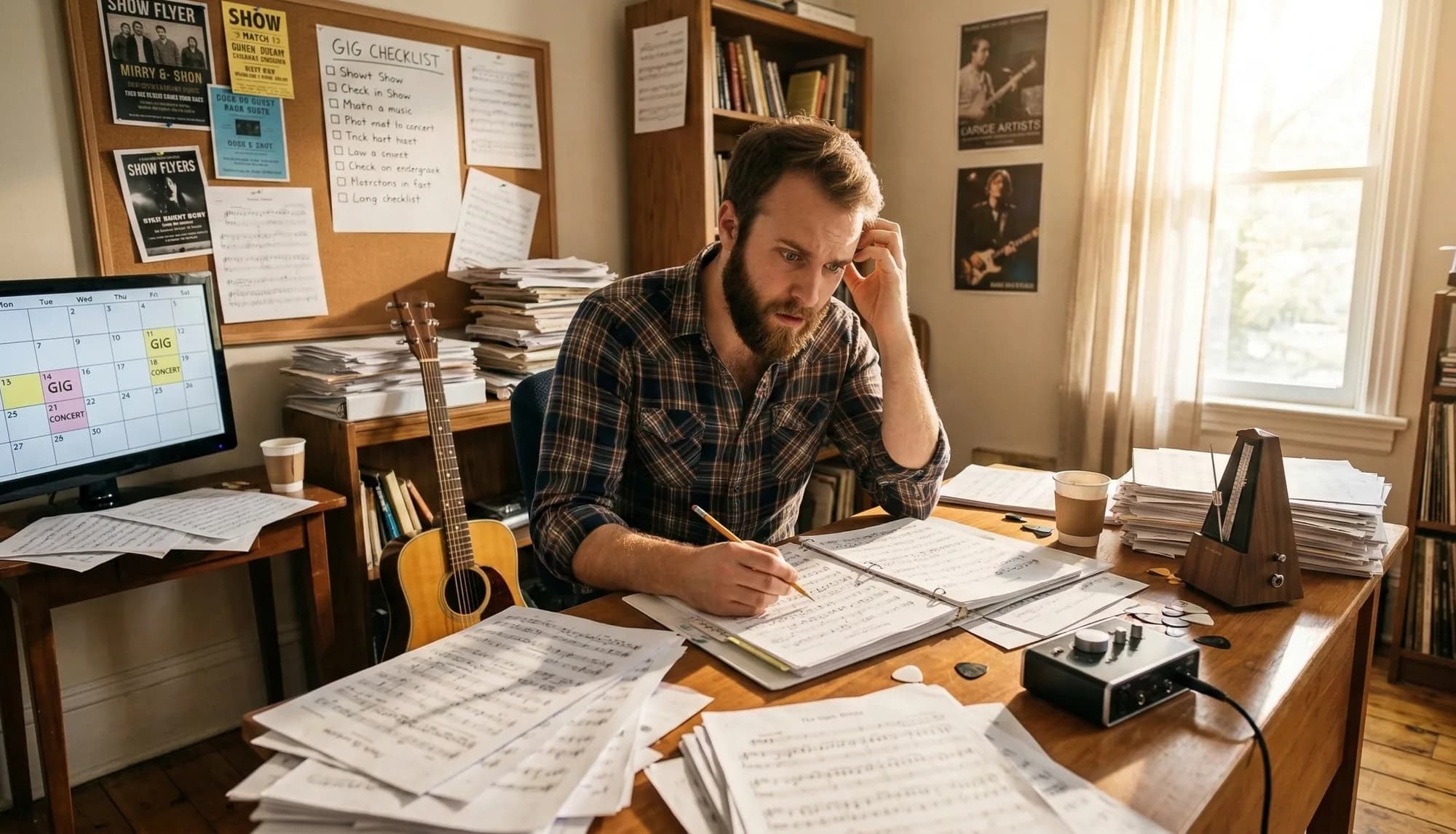
The last-minute call
"Hi there! We're Band X. Our bassist has fallen ill and we need a dep for Saturday. Have you heard of us? Can you make it?"
That call can be an exciting opportunity or a guaranteed nightmare. The difference comes down entirely to preparation.
On musician forums, threads about substitutions that went wrong are common. Deps called in at the last minute who show up to the gig without having studied the material, fluff the songs, don't know the band's dynamics. The result? An awkward evening for everyone — and a reputation that takes a hit.
The problem isn't technical ability. It's improvising on material you've never played.
The most common dep mistakes
1. Showing up without studying the repertoire
Mistake number one. The musician is called on Tuesday for a gig on Saturday. Their thinking: I can play, I'll be fine. They arrive at soundcheck and discover the band has 40 songs in the setlist, 15 of which they've never heard.
What happens: During the gig, the dep is constantly checking their phone to read the chords, misses entries, loses the thread. The other musicians have to cover for them. The client notices the hesitation.
How to avoid it: Ask for the full repertoire straight away. Study every song before soundcheck. If time is short, ask which songs are essential and focus on those.
2. Not asking for the confirmed setlist
Many bands have a repertoire of 100 songs but play only 30 at any given event. The dep who studies the whole general repertoire wastes time. The one who studies at random risks not knowing what they'll actually be playing.
What happens: The dep has studied 50 songs. The band plays 25. Of those 25, they know 15 well. The other 10 they've glanced at once — and it shows.
How to avoid it: Always ask for the specific setlist for the event. If the band hasn't finalised it yet, at least ask for the main genres and the songs that are guaranteed to come up.
3. Arriving unprepared on the logistics front
I play bass, I'll bring my instrument. But do you need an amp too? Cables? A specific pedal? Does the band use shared backline or does everyone bring their own rig?
What happens: The dep arrives with just the bass. The band expected them to bring an amp too. Or the opposite: they bring a huge amp that takes up space nobody needed.
How to avoid it: Ask explicitly: "What do I need to bring? Do you have shared backline? Is there any specific gear I should have?" Better to ask twice than show up unprepared.
4. Not communicating in time
The dep accepts the booking. Then, the day before, they send a message: "Guys, I just remembered I have something else on. I can't make it."
What happens: The band has to find an alternative at the last minute or play short-handed. The client is left disappointed. The dep's reputation — and the band's — suffers.
How to avoid it: Only accept if you're certain you're available. If something unexpected comes up, communicate immediately — not the evening before.
5. Ignoring the band's dynamics
Every band has its unwritten rules: how entries are called, who decides on song changes, how solos are handled. A dep who ignores these dynamics sticks out like a sore thumb.
What happens: During the gig, the dep takes an unplanned solo, changes the tempo of a song, or worse — contradicts the band leader in front of the client.
How to avoid it: Ask beforehand: "Are there any conventions or rules I should know about? Who calls the entries? How do you handle unexpected situations on stage?" Watch during soundcheck and adapt.
What bands expect from a dep
Here's what band leaders and managers typically expect from a session musician:
Professional communication. Replying promptly to messages. Confirming the date, time, venue and fee in writing. Arriving on time — ideally early.
Musical preparation. Having studied the songs before soundcheck. Being able to read a setlist. Being able to follow the band leader without needing constant explanation.
Flexibility. Accepting that things may change at the last minute: an extra song, a cut, a lineup adjustment. Not complaining about small changes.
Discretion. The dep is a guest. They don't contradict the leader in front of the client. They don't criticise the band. They do their job and nothing more.
Appropriate gear. A professional, functioning instrument. Spare cables. Ready for anything.
How BandCalendar helps deps
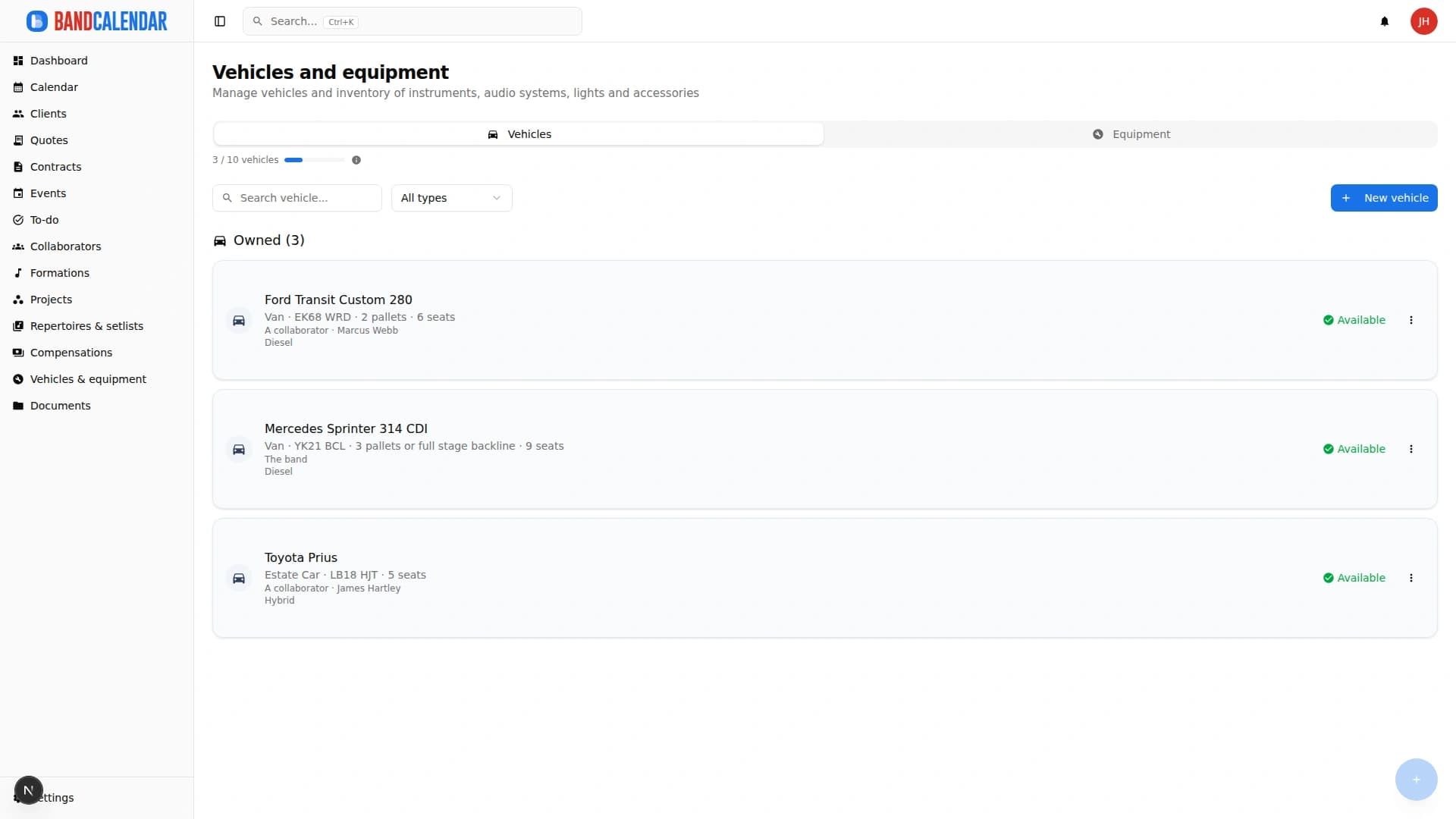
BandCalendar isn't designed only for regular bands. It's a useful tool for session musicians who work with multiple acts and want to stay organised.
Linking the dep to a specific event
When a band adds a dep to an event, the musician is associated with that specific event only — they don't become a permanent member of the lineup. This makes it possible to:
- Keep track of which events the dep has played
- Calculate the specific compensation for that performance
- Automatically share the necessary material (setlist, repertoire, logistics notes)
The dep only sees the events they've been added to — they have no access to the rest of the band's management.
Sharing repertoires and setlists with a dedicated link
Once linked to the event, the dep receives a link to access the material:
- Full repertoire of the band, with notes on which songs come up most often
- Specific setlist for the event, with the song order and notes on each track
- Logistics notes: arrival time, what to bring, who to contact on the night
The link can be sent via email or WhatsApp. The dep opens it on their phone and has everything to hand — even offline if needed.
Automatic material dispatch
BandCalendar can automatically send an email or WhatsApp message to the dep when they're added to the event. The message includes:
- Confirmation of date, time and venue
- Link to the repertoire and setlist
- Logistics instructions (where to go, who to find, what to bring)
- Automatic reminder a few days before the event
This eliminates the risk of the dep forgetting information or arriving unprepared.
History of gigs played
For deps who work regularly with a band, BandCalendar keeps a record of all past events. This makes it possible to:
- Have a portfolio of completed engagements
- Verify compensation received
- Document past work for tax returns or future quotes
The dep can export this history at any time — useful for keeping track of their work.
Real cases from the forums
Here are some typical scenarios:
Case 1 — The repertoire that never arrived
They called me for a wedding. I asked for the repertoire three times. They never sent it. I arrived at soundcheck and discovered they play 50 English-language songs. I knew about 5. It was a disaster.
Solution: The dep should persist until they receive the material. If the band doesn't provide it, weigh up whether to accept the booking at all. Better to turn it down than make a fool of yourself.
Case 2 — The wrong gear
I assumed they had an amp. They assumed I was bringing one. Result: I played without amplification for half an hour while they tried to borrow something.
Solution: Ask explicitly before the event: "What do I need to bring? Do you have backline?" Better to seem fussy than unprepared.
Case 3 — The setlist that changed at the last minute
I'd studied the setlist they'd sent me. At the gig they played a completely different one. Nobody told me.
Solution: Confirm the setlist the day before. If the band changes it, ask them to send you the updated version. Never assume anything.
The perfect dep checklist
Before accepting a dep booking:
- Confirm date, time and venue — in writing, via message or email
- Clarify the fee — clearly, before accepting
- Get the repertoire sent to you — at least the main songs
- Ask for the confirmed setlist — or at least the genres and style
- Check the gear situation — what do you need to bring, what do they provide
- Ask for a contact person — who to find when you arrive
- Study before soundcheck — don't arrive at the gig to learn the songs
- Arrive early — at least 30 minutes before soundcheck
- Read the dynamics — how the band behaves, who's in charge, how entries are called
- Be discreet — you're a guest, not the main act
The bottom line
Being a dep is real work. It requires preparation, professionalism and humility. It's not just about playing — it's about stepping into an established group, adapting to its rules and making a good impression.
The session musicians who work consistently aren't necessarily the most technically gifted. They're the most reliable: the ones who study beforehand, arrive on time, and don't cause problems.
With BandCalendar, bands can share repertoires and setlists with deps automatically and professionally. Deps receive all the material they need before the gig — and can prepare properly.
If you want to build a solid reputation as a session musician, preparation is everything. Leave nothing to chance.
Related BandCalendar workflows
Explore the connected features
Collaborators and lineups
Manage the band's real lineup: core musicians, substitutes, extra collaborators, roles, instruments, lineups, projects, linked events, payments, documents and different team permissions.
Open pageEvent calendar
An operational calendar for musicians and bands that connects sales pipeline, clients, gigs, rehearsals, tasks, reminders, lineups, documents, Excel export and personal Google Calendar and Apple Calendar/iCloud sync.
Open pageFees and Finances
Track event money on two clear layers: client collections and customer refunds (commercial documents and the Finances tab), and collaborator fees with advances, line items, withholding and expense reimbursements. Summaries by period, event or musician.
Open pageStop wasting time with Word, PDFs and spreadsheets.
- Contracts with simple electronic signature and tracked communications
- All confirmations in writing, no verbal-only agreements
- Protected reputation: everything in black and white
Get one useful guide a month