How to Manage Multiple Band Bookings on the Same Day
A practical guide to coordinating musicians, equipment, transport and clients across multiple events on the same day.
Published · Updated · BandCalendar

The short answer
To manage multiple music events on the same day, assign each event a lineup and an on-site lead. Check musicians, technicians, equipment and vehicles for the whole period they are needed, including travel. Agree the lineup with each client and prepare a replacement plan before confirming.
Multi-booking can involve a band with different lineups, a collective or an agency. BandCalendar lets you organize collaborators and lineups and link them to events; confirm people’s actual availability and travel arrangements separately.
Can you accept a second booking?
Compare the full commitments, not just stage times. In this illustrative example, a sound engineer may be needed at both events even though their performance times differ.
| Check | Wedding A | Wedding B |
|---|---|---|
| Lineup and lead | Acoustic trio and nominated lead | Five-piece band and nominated lead |
| People | Musicians and technician confirmed | Musicians and technician confirmed |
| Gear and transport | Audio kit A and car A | Audio kit B and van B |
| Occupied time | Preparation, travel, event and return | Preparation, travel, event and return |
| Backup | Check replacements and rental | Check replacements and rental |
Allow for load-out and travel between venues. Before accepting, include extra players, rental, travel and coordination in the event’s costs.
How do you assign musicians and event leads?
Agree roles, arrival times and fees for each date. Ask musicians and technicians for an explicit confirmation; they may have commitments outside your calendar. Appoint an on-site lead, sometimes called a band captain, and agree what they can decide without contacting the bandleader.
Give each lineup its own address, schedule, contacts, setlist, special requests and technical notes. Check that details for one client do not reach the wrong event.
How do you prevent equipment and vehicle conflicts?
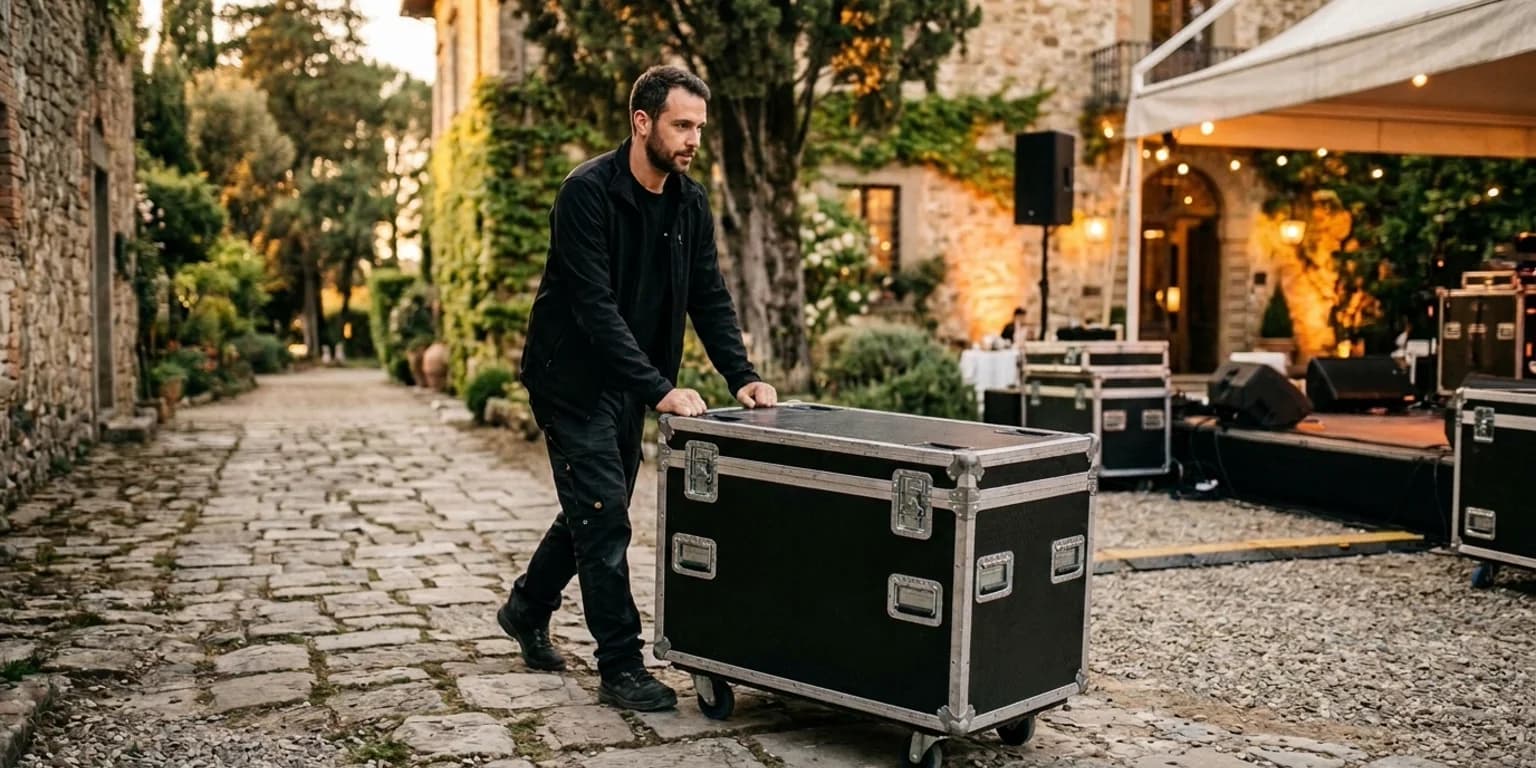
List the resources and quantities needed for each booking. Reusable kit checklists can help with preparation, but individual items can also be allocated. Arrange rental early if your inventory is insufficient.
BandCalendar’s vehicles and equipment can be assigned to events; availability checks consider overlapping event periods and equipment quantities. Enter times that reflect actual use, including any travel or setup you need to reserve.
How do you agree the lineup and prepare for problems?
Explain whether the lineup can change, which features or named performers are guaranteed and how you will communicate substitutions. Keep a list of potential replacements, but confirm their availability when needed. Each event lead should know whom to contact if a musician, vehicle or system becomes unavailable.
Configure team roles and permissions for the information each person needs. Visibility depends on the permissions and scope assigned.
How do you assess profitability?
Subtract agreed musician and technician fees, travel, rental, equipment and other service costs from the client fee. Account for preparation and coordination time as well. Track each event separately and compare the estimate with actual costs afterwards.
Frequently asked questions
Can the same musician play two events on the same day?
Yes, if both commitments are compatible and the musician has confirmed them. Allow for load-in, soundcheck, performance, load-out, travel and a realistic buffer.
How much time should a musician allow between gigs?
There is no universal interval. Consider distance, traffic, access, technical work and the musician’s role; if the transition is too tight, use another player or revise the schedule.
What if a musician accepts two incompatible bookings?
Contact the musician promptly to clarify which booking they can keep. Check a replacement’s availability and repertoire, update the event lead and inform the client as agreed.
What should a client be told about a changing lineup?
Before booking, explain which lineup features or named performers are guaranteed and how substitutions will be handled. Record the agreement and use videos representative of the act offered.
How many events can a band manage on one day?
There is no universal maximum. It depends on available people, event leads, equipment, transport, client support and costs. Check these resources before accepting another booking.