Live Band vs DJ for Your Wedding: What Nobody Tells You (With Real Prices)
Real pricing for UK, US, Ireland and Australia. Stage space, noise limiters, repertoire limits, hybrid options and the mistakes couples regret. Updated May 2026.
May 16, 2026 · BandCalendar
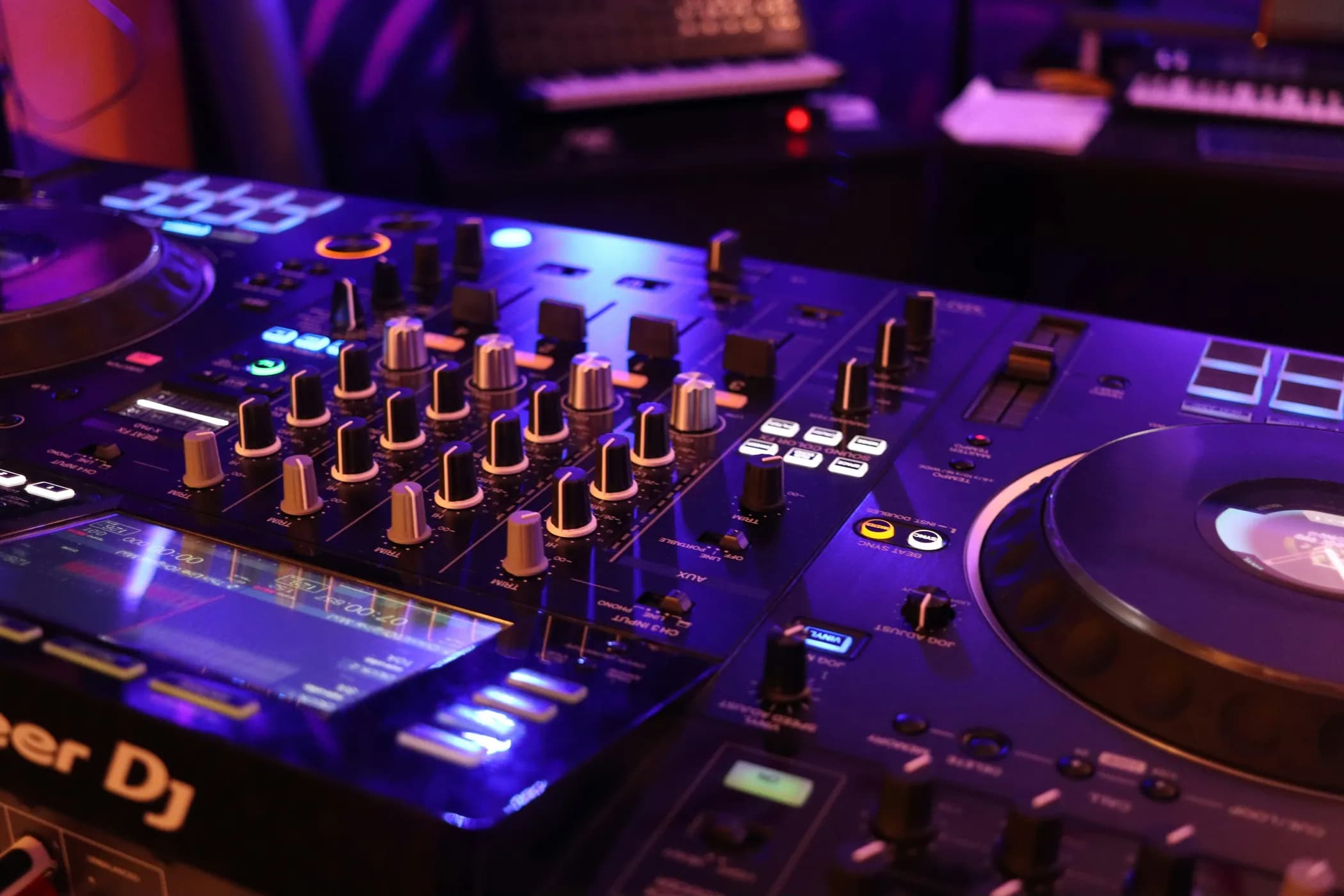
Photo by Panagiotis Falcos on Unsplash
The question that divides every wedding planning conversation
"But how much more does a band cost than a DJ?" Every wedding musician hears it. Every couple Googles it at some point.
The honest answer involves more than a price comparison. A live band and a DJ are different products — they have different space requirements, different performance windows, different strengths, and different risks. Knowing these differences is what lets couples make a decision they won't regret.
This guide covers real pricing from UK, US, Australia and Ireland industry data, plus the practical constraints that rarely come up in the first conversation.
What you actually pay — by country
United Kingdom
UK pricing data from Last Minute Musicians, Alive Network, FixTheMusic and Seventh Second (all updated 2026):
| Band size | Typical range | Notes |
|---|---|---|
| Solo musician | £350–£650 | Ceremony or background |
| Acoustic duo | £600–£1,000 | Cocktail hour favourite |
| 3-piece | £850–£1,500 | |
| 4-piece | £1,100–£2,500 | Most common wedding band |
| 5-piece | £1,300–£3,000 | |
| 6-piece | £2,000–£6,000 | Full showband sound |
The national average across all act sizes is approximately £1,093 (Last Minute Musicians, 2026). For a typical 4–5 piece function band, the realistic budget is £1,580–£1,880 (FixTheMusic / Seventh Second, 2026).
Regional variation matters: London averages around £2,100, Scotland £1,955, Yorkshire £1,835. Prices are higher in cities and lower in rural areas.
What's typically included: two live sets of 45–60 minutes each (usually 8:30pm–11:30pm), professional PA and stage monitors, lighting rig, DJ playlist between sets (often included or a modest add-on), transport within 30–50 miles, and public liability insurance. Early venue access for load-in, custom song arrangements and ceremony acoustic sets are usually priced separately.
Wedding DJ costs UK:
| Level | Range |
|---|---|
| Budget / novice | Under £300 |
| Professional | £300–£800 |
| Full-day packages | £800–£1,500 |
| Premium | £1,500+ |
Most couples pay £500–£1,200 for a professional wedding DJ (Bridebook 2026).
United States
Data from The Knot Real Weddings Study (10,474 US couples married in 2025 — the most authoritative US source):
| Service | Average | Typical range |
|---|---|---|
| Live wedding band | $4,500 | $2,000–$8,000+ |
| Wedding DJ | $1,800 | $800–$2,700+ |
For a proper 4–6 piece wedding band, the realistic budget is $3,000–$10,000+ depending on region. The Mid-Atlantic (New York, New Jersey, DC) commands the highest rates — bands average $7,300, DJs average $2,500. The West and South are at the lower end.
The headline statistic: 71% of US couples hire a DJ; only 12% choose a live band (The Knot, 2025). The price difference is the primary driver.
Ireland
Survey data from IrishWeddingBands.ie (2025-2026):
- Average couple spend on evening entertainment: €2,599
- Typical band range: €1,500–€3,000 for a professional evening performance
- About 80% of quotes are in the €1,500–€2,500 range
Most Irish quotes include a 2-hour live performance, sound system, some lighting and travel allowance.
Australia
Data from Bands To You and Easy Weddings (2025):
- Live wedding band: AUD $2,500–$6,000+ for a full evening
- Solo/duo acts: AUD $600–$1,600
- Premium/large bands: AUD $8,000+
Regional variation: Perth is generally cheapest; Sydney and Melbourne highest.
The practical differences nobody warns you about
Stage space: it matters more than couples think
This is the constraint that generates the most last-minute surprises:
| Entertainment | Minimum space |
|---|---|
| DJ | ~4–5 m² (consolle + rack) |
| 4-piece band | ~18–20 m² |
| 6-piece band | ~25–30 m² |
A 4-piece band typically needs roughly 10 × 20 ft of clear floor space. That's equivalent to two or three large round dinner tables. The band also needs adequate electrical supply (a separate circuit is recommended), clear vehicle access for equipment load-in, and early venue access — usually 2–3 hours before guests arrive.
Many couples discover this only when the band arrives on the day. Do the site visit before signing anything.
How long will there actually be music?
| Aspect | Live band | DJ |
|---|---|---|
| Typical performance | 2 sets × 45–60 minutes | Full evening, continuous |
| Breaks between sets | 20–30 minutes each | None |
| Arrival before guests | 2–3 hours | 1–1.5 hours |
| Total time in venue | 6–10 hours | 3–5 hours |
A band plays for roughly 90–120 minutes of live music across an evening. That is not a criticism — it is the reality of live performance. During the breaks, something needs to happen. Many bands include a DJ playlist service (managed by the band's sound tech) between sets, either included in the quote or as a modest add-on. If not, plan a playlist.
The UK sound limiter problem
This is the most underestimated practical issue for couples booking bands in the UK.
Sound limiters are installed at a very large proportion of UK venues — required by local councils as a condition of the entertainment licence, particularly at historic buildings and in residential areas. When the sound level exceeds the set threshold for more than a few seconds, the limiter cuts all electrical power to the performance area for approximately one minute.
- Most limiters are set at 90–100 dB
- Wedding bands typically operate at 95–105 dB
- DJs can comfortably operate at ~90 dB, within most limiter thresholds
- Historic venues may set limits as low as 85–90 dB to protect the structure from bass vibrations
Professional bands are experienced with limiters and will ask about the venue's dB limit during the booking process. Couples should ask their venue directly and share the answer with prospective bands before signing.
At venues with very strict limits (85–90 dB), a full electric function band may genuinely not be compatible. Acoustic or amplified-acoustic acts (small jazz trio, acoustic duo) are sometimes the only live option.
Repertoire flexibility
Live band: a typical wedding band has a repertoire of 40–60 songs, agreed in advance. Learning a new song takes weeks of rehearsal and is usually priced as a custom arrangement (approximately £150 per song in the UK). On the night, they can generally accommodate requests only if the song is already in their set.
DJ: access to an effectively unlimited music library. Any song, instantly, including the original recording. Last-minute genre changes and on-the-spot requests are handled without friction.
For the first dance in particular — if the couple has a very specific song and wants the original version — a DJ is often the safer choice unless the band is specifically asked to learn it in advance.
What each option actually delivers for your guests
Live bands consistently score higher on "atmosphere" and "guest engagement" in post-wedding surveys. The visual performance — musicians moving, interacting with the crowd, reacting to the room — creates something a DJ playlist simply cannot replicate. The cocktail hour with a jazz trio walking among guests is one of the most reliably photographed moments of any wedding.
DJs deliver consistent technical sound quality, seamless transitions between any musical era, and the stamina to keep a floor moving from 8pm to 1am without a dip in energy. The best wedding DJs also double as MCs, managing the timeline, announcements and transitions between wedding moments.
Neither is objectively better. They're different products.
Hybrid options: the growing middle ground
The "band or DJ" framing misses a third category that many couples end up choosing.
Band + DJ for late night
The most common hybrid: the live band plays two sets during the evening (roughly 8:30–11:30pm), then the DJ takes over for late-night dancing until close. Many bands manage the DJ service themselves using their own PA, either included in the fee or as a modest add-on (typically £150–£350 in the UK).
If the band and DJ are separate bookings, budget for approximately £2,100–£3,500+ in the UK or $3,000–$7,000+ in the US for both services.
DJ + live saxophonist or vocalist
A DJ paired with a live musician — typically a saxophonist, vocalist or percussionist — who improvises over the recorded tracks. This format has grown significantly in popularity: it delivers live energy without requiring the stage space or setup time of a full band.
UK pricing for specialist DJ-live hybrid acts: £500–£2,500+. The format is particularly effective for cocktail hours, rooftop parties and intimate evening receptions.
Band with pre-recorded rhythm section
Some bands use a click track for drums and bass, with live melody, harmony and solo instruments on top. This is common in bands that work in venues with strict space or volume restrictions. It is not always disclosed proactively — couples who care about fully live performance should ask directly.
Common mistakes on both sides
When booking a live band
Booking too late. The best bands are fully booked 12–18 months ahead for peak Saturdays (May–September). Starting the search at 6 months out means significantly limited choice.
Not confirming the venue's noise limit. The band arrives, spends 90 minutes setting up, and then a sound limiter cuts the power. This is a real, documented scenario. Ask the venue for their dB limit before booking the band.
Not planning for the breaks. Without a clear plan for what plays during 20-minute band breaks, the dance floor empties and the energy dies. Confirm the band's between-sets service before signing.
Underestimating the total cost. The headline band fee often excludes travel beyond a set radius, early-access fees for long setup times, hotel accommodation for distant venues, and custom song arrangements. Budget 15–25% above the quoted fee for these extras.
Not asking about substitution policy. What happens if a musician is ill on the day? Professional bands carry substitutes. This should be in the contract.
When booking a DJ
Confusing DJ and MC. A DJ manages music. An MC manages the timeline, announcements and crowd coordination. Many DJs handle both, but quality varies enormously. Ask specifically how they handle the dinner announcement, cake cutting, first dance intro and other timeline moments.
Booking on price alone. Budget DJs have been documented backing out of bookings for higher-paying events closer to the date. A reputable DJ fee includes date security — a legally binding contract backed by professional reputation.
Assuming all equipment is equivalent. Professional DJs carry backup hardware. Budget DJs often do not. A single equipment failure with no redundancy ends the music for the night.
Not providing a do-not-play list. Without it, the DJ may play songs with negative associations — an ex's favourite, a track tied to a difficult memory. A short do-not-play list is as important as the request list.
Ignoring the lack of visual spectacle. A DJ at a laptop is largely invisible to most guests. Couples who realize post-wedding they wanted more visual entertainment are among the most consistent sources of regret in post-event surveys.
Outdoor weddings and historic venues
Outdoor weddings
Sound disperses without walls to reflect it outdoors. This means:
- More powerful speaker arrays are needed for equivalent perceived volume
- Bass travels further, increasing the risk of noise complaints from neighbouring properties
- UK local authorities often require a Temporary Event Notice (TEN) for amplified outdoor music
- Weather is a genuine risk for acoustic instruments and electronics alike
Both bands and DJs face these challenges, but a DJ can adapt speaker placement more easily than a full band setup.
Historic venues
These venues appear on most "Top Wedding Venues" lists — and they often come with the most restrictions:
- Sound limiters at 85–95 dB (protection from bass vibrations to historic structures)
- No drilling or permanent rigging for speakers
- Floor weight limits
- Narrow or restricted load-in access
- Strict curfew times (often 10pm–midnight)
At many historic venues, a full electric function band is simply not viable. An acoustic duo, jazz trio or string quartet is the realistic live option. A DJ can usually operate within these constraints more easily.
How to decide
| Situation | Recommendation |
|---|---|
| Budget under £1,000 / $2,500 | Professional DJ |
| Venue smaller than 50 m² | DJ or duo/acoustic act |
| Want visual spectacle and "wow factor" | Live band |
| Evening music lasting 6+ hours | DJ, or band + DJ |
| Venue with strict sound limiter | DJ or acoustic act |
| Want the exact original recording for first dance | DJ |
| Mixed guest ages (teens to grandparents) | Live band (often more universal) |
| Mid-budget, want something distinctive | DJ + sax or live vocalist |
| Peak Saturday in May–September | Book either option 12–18 months ahead |
A note for musicians reading this
The couple asking "how much more is a band than a DJ?" is not attacking your value. They are trying to understand what they are buying.
The most effective response is a transparent one: what is included in your quote, how much space you need, how many sets you play, what happens during breaks, and what additional costs might apply. A detailed, itemised quote — not a single number — is what separates a professional booking from an ambiguous one.
BandCalendar helps musicians build structured quotes with separate line items (base service, travel, late-night DJ set, custom arrangements), so the couple sees exactly what they are paying for and why.
Pricing data from May 2026. UK data: Last Minute Musicians, Alive Network, FixTheMusic, Seventh Second, Bridebook. US data: The Knot Real Weddings Study (n=10,474, 2025). Ireland: IrishWeddingBands.ie. Australia: Bands To You, Easy Weddings. Figures are indicative and vary by date, region and specific requirements.
Related BandCalendar workflows
Explore the connected features
Wedding bands
BandCalendar helps wedding bands and live musicians turn inquiries, quotes, contracts, repertoires, setlists, logistics and payments into one workflow that the whole team can use before, during and after the event.
Open pagePrivate events
BandCalendar helps musicians, bands and small ensembles manage private parties, corporate events, receptions and custom bookings with clients, quotes, contracts, timings, venues, documents and payments always connected.
Open pageSetlists and repertoires
Organize repertoires, song catalog, keys, notes, total duration, event setlists, song requests from the audience or client, exports and public shares in a workflow connected to events.
Open pageStop wasting time with Word, PDFs and spreadsheets.
- Contracts with simple electronic signature and tracked communications
- All confirmations in writing, no verbal-only agreements
- Protected reputation: everything in black and white
Get one useful guide a month
Related articles
Freelance Musician Tax: How It Works in the UK, US, Canada and Australia
May 16, 2026
Civil Ceremony Music: What You Can and Can't Play (UK, US, Ireland, Australia)
May 16, 2026